

Community as Medicine: How Connection Shapes the Gut, Mind and Longevity
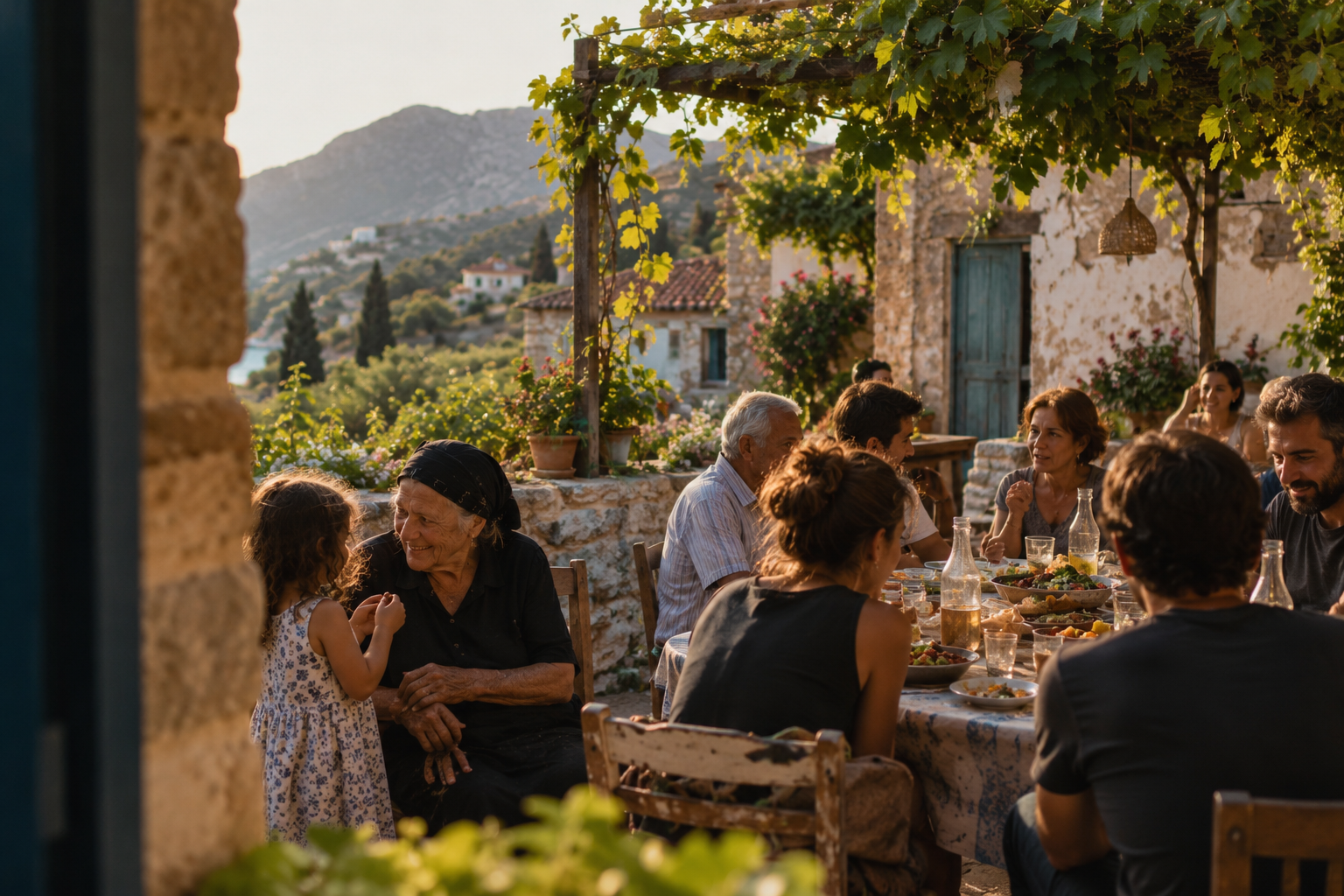
There is something about life in Greece that has made me think differently about what it means to age well.
It is not simply the Mediterranean diet, the olive oil, the sunshine or the slower pace of life. It is something less tangible, but no less important.
It is the way people remain part of one another’s lives.
I have watched older generations remain included in the everyday rhythms of their families and communities. Grandparents are not always sitting on the sidelines, waiting for someone to visit. They are at the table. They are part of conversations and decisions. Their opinions are sought, their stories are remembered, and their presence continues to shape the lives of those around them.
Of course, no family or culture is without its difficulties, and not every older person in Greece experiences this kind of connection. But what I have witnessed has stayed with me.
It has made me wonder whether, in our pursuit of longevity, we have become so focused on what we can measure in the body that we sometimes overlook the relationships that make life worth living.
As a naturopath, preventative health and longevity are central to the way I practise. I talk often about nutrition, metabolic health, circadian rhythms, the nervous system and the importance of understanding the body as an interconnected whole.
But there is another part of that picture that deserves just as much attention.
The people we share our lives with.
And increasingly, the science is asking us to take social connection seriously as a determinant of health.
What the Blue Zones Teach Us About Belonging
If you have followed my work for a while, you will know that I often refer to the Blue Zones.
These are populations and geographical areas studied for their unusually high concentrations of people reaching advanced ages. They have attracted attention because researchers have sought to understand the combination of circumstances that may contribute to longer lives.
One of these areas is Ikaria, here in Greece.
When people talk about the Blue Zones, the conversation often begins with food: legumes, vegetables, olive oil and predominantly plant-rich dietary patterns. Movement, sleep and the surrounding environment are also part of the discussion.
But social relationships are another recurring area of interest.
A 2025 scientific review of Blue Zone research identifies social support alongside diet, physical activity and environmental factors as relevant to understanding longevity in these populations. Researchers also continue to examine how exceptional longevity is documented and which factors contribute to it.
That distinction matters.
We cannot look at a long-lived community, identify one appealing feature and conclude that it caused its residents to live longer. Longevity reflects many interacting influences, including genetics, living conditions, healthcare, behaviour and chance.
The Blue Zones are not a prescription for living to 100. They are an invitation to examine the conditions in which people age.
And one of the questions they invite us to ask is whether remaining connected to other people might be part of a healthier later life.
In my experience of Greece, connection is often built into ordinary routines rather than treated as another activity to schedule.
A conversation at the local shop. A shared meal that lasts longer than intended. Neighbours checking in. Grandparents helping with children. Younger generations turning to older relatives for advice.
None of these moments looks particularly remarkable on its own.
But together, they can create something many people spend years searching for:
A sense of belonging.
Loneliness and Social Isolation Are Not the Same Thing
Before looking at what connection does for our health, it is important to understand what we mean by it.
Social isolation describes having relatively few relationships, social roles or interactions. Loneliness is different: it is the distressing feeling that our relationships do not meet our need for connection.
A person can live alone and feel deeply connected. Another can be surrounded by family, colleagues and acquaintances yet feel profoundly lonely.
The World Health Organization (WHO) also emphasises that social connection is not only about the number of people in our lives. It includes the support exchanged within relationships and their quality—whether they are caring and satisfying or strained and harmful.
This is an important distinction for clinical practice.
Telling someone who feels lonely to simply spend more time around people may miss what they actually need.
Perhaps they have plenty of social contact but no one they feel safe confiding in. Perhaps they have recently moved, lost a partner, become a parent or retired from a career that once gave them a strong sense of identity.
Perhaps they are physically surrounded by others but no longer feel that they have a meaningful place among them.
Connection is not merely proximity. It is the experience of being known, valued and included.
Why Social Connection Is a Health Conversation
In June 2025, the WHO Commission on Social Connection published its flagship report, identifying loneliness and social isolation as significant public-health concerns.
The report estimated that approximately one in six people worldwide experiences loneliness. It also highlighted associations between social disconnection and poorer physical and mental health, including cardiovascular disease, type 2 diabetes, depression and anxiety.
This does not mean loneliness directly causes every one of these conditions, or that developing a stronger social network will prevent them.
The relationship is complex and can work in both directions. Chronic illness, pain, disability and poor mental health can make social participation more difficult. At the same time, reduced connection may remove sources of practical support, emotional security and opportunities for healthy daily routines.
Nevertheless, the overall body of evidence is substantial enough that social connection deserves a place in conversations about preventative health.
A 2025 systematic review and meta-analysis of longitudinal studies in older adults found that loneliness was associated with higher all-cause mortality. Because the included studies were observational, the findings demonstrate an association rather than proving that loneliness itself caused the deaths.
For me, this changes the way we should think about health.
We are comfortable asking people about their diet, exercise, smoking, alcohol intake and sleep.
But how often do we ask whether they have someone to call when something goes wrong?
Whether they share meals with anyone?
Whether they feel they belong somewhere?
Whether there is anyone who would notice if they stopped showing up?
These are not peripheral questions. They can reveal important aspects of the environment in which a person is trying to maintain their health.
The Mind Needs More Than Mental Stimulation
We often discuss brain health in terms of nutrients, sleep, physical activity and cognitive stimulation.
All of these can be relevant. But the brain also develops, adapts and functions within a social environment.
Relationships provide opportunities for conversation, learning, emotional expression, shared memories and engagement with the world around us.
They can offer reassurance during stressful periods and a sense of continuity during major life transitions.
Conversely, loneliness has been associated with poorer mental health and cognitive outcomes.
A 2024 meta-analysis published in Nature Mental Health examined longitudinal data from more than 600,000 individuals and found an association between loneliness and dementia risk. This does not establish that loneliness independently causes dementia or that increasing social contact will necessarily prevent it. Changes in cognition and health can themselves affect a person’s relationships, and researchers must account for these overlapping influences.
Even with those limitations, the findings give us reason to consider social wellbeing alongside other aspects of brain health.
And this is where my observations of older generations become especially meaningful.
There is a difference between being kept busy and being genuinely included.
An older person may enjoy activities designed specifically for their age group. But they may also want to contribute to family decisions, teach a grandchild something, offer advice, maintain friendships, share their knowledge or simply be part of an ordinary conversation that is not centred on their age or health.
A person does not stop needing purpose, reciprocity or belonging when they grow older.
Have We Lost the Place of Our Elders?
One of the things I find most moving about the intergenerational relationships I have witnessed in Greece is the continued presence of older people in everyday life.
They may receive help as their needs change, but they can also remain people whom others turn to.
Their experience still has value.
Their opinions still carry weight.
They are not only recipients of care; they are contributors to family and community life.
This is not a universal picture of Greek ageing, nor is it exclusive to Greece. Meaningful intergenerational relationships exist in many cultures and households. Yet it has prompted me to think about what can happen when ageing is accompanied by a gradual loss of social roles.
Retirement can remove daily contact with colleagues and a sense of professional purpose. Bereavement can alter a person’s entire social world. Reduced mobility, inaccessible transport and changing neighbourhoods can make familiar places harder to reach.
Adult children may live far away. Friends may become unwell or die. Someone who was once deeply involved in their community may find that opportunities to participate have narrowed.
The WHO identifies major life changes, health difficulties and weak community resources among the factors that can contribute to social disconnection.
This is why I think we need to look beyond the question of who is providing an older person’s care.
Professional aged care, respite and palliative services can be essential. They can provide skilled support, safety and relief for families. It would be neither fair nor accurate to suggest that using these services means a family has abandoned an older relative.
The more important question is whether, wherever someone lives and receives care, they still have opportunities for relationships, autonomy and meaningful participation.
Research within long-term care settings has identified social connection as an important aspect of residents’ quality of life and person-centred care.
Perhaps we should ask not only, “Is this person being looked after?”
But also:
“Does this person still feel that they belong?”
“Are they included in decisions that affect their life?”
“Do they have opportunities to give, as well as receive?”
“Does anyone seek out their company simply because they enjoy being with them?”
These questions matter at every age, but they can become particularly important when health, mobility or independence changes.
Are We Living Longer, but Less Connected?
It is tempting to look at modern life and conclude that we are living shorter lives because we have lost our sense of community.
The global picture is more complicated.
According to United Nations population estimates, global life expectancy fell during the COVID-19 pandemic but rose again to approximately 73.3 years in 2024. The WHO has also warned that progress in global health and longevity has slowed and that the pandemic reversed years of gains.
We therefore cannot say that life expectancy is declining everywhere, or attribute changes in lifespan to a loss of community.
But I think there is another question worth asking.
Are we giving enough attention to the quality of the years we gain?
Living longer is not the same as living well.
A person may reach an advanced age while experiencing prolonged loneliness, loss of purpose or limited opportunities to participate in the world around them.
Another may live with significant health limitations yet continue to experience meaningful relationships, enjoyment and a strong sense of belonging.
Neither experience can be reduced to a number on a longevity chart.
For me, preventative medicine is not simply about adding years to life. It is also about supporting the conditions that allow people to remain engaged in their lives for as long as possible.
And community is part of that conversation.
Community as an Everyday Health Practice
When we hear the word community, we might imagine large gatherings, busy social calendars or being surrounded by an extensive network of family and friends.
But meaningful connection does not have to look like that.
For one person, it might be a weekly meal with family. For another, a walking group, a conversation with a neighbour, volunteering, attending a place of worship or regularly visiting a local café where people know their name.
For an older person, it might mean being invited into family decisions, teaching a skill, helping with a grandchild when they wish to, or maintaining a friendship that has lasted decades.
For someone who lives alone, it might mean having one or two trusted relationships that feel dependable and reciprocal.
There is no single ideal social life that suits everyone.
And connection should never be reduced to another wellness target that people feel they are failing to meet.
Loneliness can arise through circumstances that are not easily changed. Disability, illness, grief, financial pressures, caring responsibilities and the absence of accessible community spaces can all create genuine barriers.
That is why strengthening social connection cannot be left entirely to individuals. Families, neighbourhoods, workplaces, healthcare services and communities all have roles to play in creating opportunities for people to participate.
The WHO’s 2025 report calls for action across individual, community and policy levels, including stronger community spaces and services that make connection more accessible.
In everyday life, though, I think we can begin with something simple.
Make room at the table.
Invite someone into the conversation.
Ask an older relative what they think, rather than assuming they no longer want to be involved.
Check in with the person who has become quieter or less visible.
Build routines that allow relationships to develop naturally, rather than relying only on occasional celebrations or planned visits.
And remember that connection is reciprocal. It is not only about what we can do for someone else, but also about allowing them to remain someone who contributes to our lives.
Sev’s Final Thoughts
When I think about the Blue Zones, I do not see a secret formula for longevity.
I see an opportunity to ask broader questions about how we live.
What do our daily routines support? What kind of environments are we creating? What happens to our relationships as we age? And do we continue to make space for people when their roles, abilities or needs change?
My experience in Greece has reminded me that some of the most meaningful aspects of health are found in ordinary moments.
A shared meal. A familiar face. A conversation across generations. The comfort of knowing that you have a place in someone else’s life.
As a naturopath, I will always be interested in the physiology of health: the nervous system, digestion, metabolism, hormones and the ways these systems communicate.
But physiology does not exist separately from the life a person is living.
We can nourish the body with food. We can support it with movement and rest. And we can also create the conditions for people to feel connected, valued and included.
That is why I believe community deserves a place in the conversation about preventative medicine.
Not as a cure for illness, or a guarantee of longevity.
But as an important part of what it means to live well.
Perhaps one of the most meaningful things we can do for healthy ageing is to make sure that, as the years pass, people do not lose their place at the table.
Sevim xx
