

Circadian Rhythm & Morning Light: The Science of Syncing Your Body Clock
After writing my recent post on cortisol, I knew I wanted to expand the conversation further — because hormones never work in isolation.
The body is constantly communicating through feedback loops, rhythms, neurotransmitters, hormones, and environmental signals. Cortisol doesn’t simply rise randomly. Melatonin doesn’t just “make you sleepy.” Energy, mood, sleep, metabolism, focus, hunger, hormones, and even immune function are all deeply connected to one of the most overlooked systems in modern health:
The Circadian Rhythm
And honestly, the deeper I go into this topic clinically and personally, the more convinced I become that modern humans are profoundly disconnected from the biological rhythms we evolved alongside.
We’ve become surrounded by artificial light, artificial schedules, artificial stimulation, artificial food, artificial environments — and then wonder why so many people feel anxious, exhausted, inflamed, wired-but-tired, hormonally dysregulated, and unable to truly rest.
The body was never designed for this level of circadian confusion.
Your Body Runs on Timing
Circadian rhythm is your body’s internal 24-hour clock.
Deep in the brain sits a tiny area called the suprachiasmatic nucleus — the body’s “master clock” — which constantly receives information from the environment, particularly light exposure through the eyes.
This clock then coordinates rhythmic patterns throughout the entire body.
Your sleep cycle
Your cortisol rhythm
Melatonin release
Blood sugar regulation
Body temperature
Digestion
Hormone production
Mitochondrial energy production
Immune activity
Mood and neurotransmitters
Everything runs on timing.
The body is less like a machine and more like an orchestra.
Every system relies on rhythm and synchronisation.
When those rhythms become disrupted, symptoms begin appearing everywhere.
Morning Light: The Signal Humans Were Designed Around
For most of human history, humans woke with sunlight.
Morning light was one of the primary signals telling the brain: The day has begun.
And the body responded accordingly.
When natural morning light enters the eyes, specialised cells in the retina send signals directly to the brain’s master clock. This triggers what’s called the Cortisol Awakening Response — a healthy natural rise in cortisol designed to help you wake up, feel alert, stabilise blood sugar, and prepare physically and mentally for the day ahead.
This is something that gets misunderstood constantly online.
Cortisol itself is not “bad.”
In fact, healthy morning cortisol is essential for:
energy
focus
motivation
blood sugar regulation
immune coordination
and resilience
At the same time, melatonin — your primary darkness hormone — begins switching off.
This is where circadian biology becomes fascinating.
Cortisol and melatonin work almost like sister rhythms: one guiding wakefulness, the other guiding restoration.
In a healthy body, cortisol rises with morning light and gradually tapers toward night, while melatonin stays low during the day and rises in darkness to prepare the body for sleep, repair, detoxification, and recovery.
But modern life has disrupted this relationship completely.
The Modern Light Environment Is Biologically Confusing
Most people now spend their mornings indoors under dim artificial lighting instead of natural sunlight.
Then at night — when the brain expects darkness — we expose ourselves to:
bright LEDs
televisions
phones
laptops
tablets
fluorescent lighting
and endless stimulation
From a circadian perspective, we’ve essentially reversed nature.
Too little bright light during the day.
Too much bright light at night.
And the body notices.
One of the biggest problems is that modern LED lighting is often heavily enriched in blue wavelengths. During the daytime, blue-spectrum light is actually useful — it helps suppress melatonin appropriately and supports alertness.
The issue is excessive exposure after sunset.
At night, bright blue-enriched light can suppress melatonin production and delay the brain’s understanding that it’s time to sleep.
This is why people often feel wide awake late at night, unable to “switch off,” exhausted in the morning, foggy during the day, or dependent on caffeine to function.
The nervous system loses its sense of timing.
The LED Flicker Conversation
There’s another part of this conversation that I think deserves more attention: flicker.
Many LED lights rapidly flicker at speeds too fast for us to consciously notice (though you might notice it when you open your phone camera and record a video). This is called temporal light modulation.
Research in this area is still evolving, and I want to be careful not to overstate the science. We cannot definitively say that LED flicker directly causes cortisol dysregulation or insomnia in everyone. But what we do know is that certain types of flicker exposure have been associated with:
eyestrain
headaches
visual fatigue
migraine susceptibility
concentration difficulties
and neurological discomfort in sensitive individuals
And honestly, I think many people intuitively feel this. Some environments simply feel overstimulating to the nervous system.
From a naturopathic perspective, if somebody is already struggling with burnout, anxiety, insomnia, sensory overload,
migraines, nervous system dysregulation, or chronic stress, then light quality absolutely deserves to be part of the conversation.
The human body evolved around:
sunlight
firelight
candlelight
moonlight
and darkness
Not bright artificial light at midnight.
Circadian Disruption Affects More Than Sleep
One of the biggest misconceptions about circadian rhythm is thinking it only affects sleep.
Circadian disruption influences almost every major system in the body.
When the body loses rhythmic synchronisation, we can begin seeing changes in:
mood
energy
blood sugar regulation
hormones
thyroid function
appetite
immune resilience
inflammation
fertility
mental clarity
and metabolic health
This is partly why shift work has been associated with increased risk of metabolic dysfunction, cardiovascular disease, mood disorders, and hormonal disruption.
The body thrives on predictability.
And modern life is incredibly dysregulating.
Supporting Your Circadian Rhythm Naturally
The beautiful thing about circadian biology is that the body responds surprisingly quickly when given the right signals consistently.
One of the most powerful things you can do is get outside within the first 30–60 minutes of waking. Even a short period of natural morning light exposure can help anchor circadian rhythm and improve sleep quality later that night.
Reducing bright artificial light exposure after sunset also makes a significant difference.
This doesn’t mean living in fear of technology or throwing your phone into the ocean. It simply means becoming more intentional with your environment.
Things that can help include:
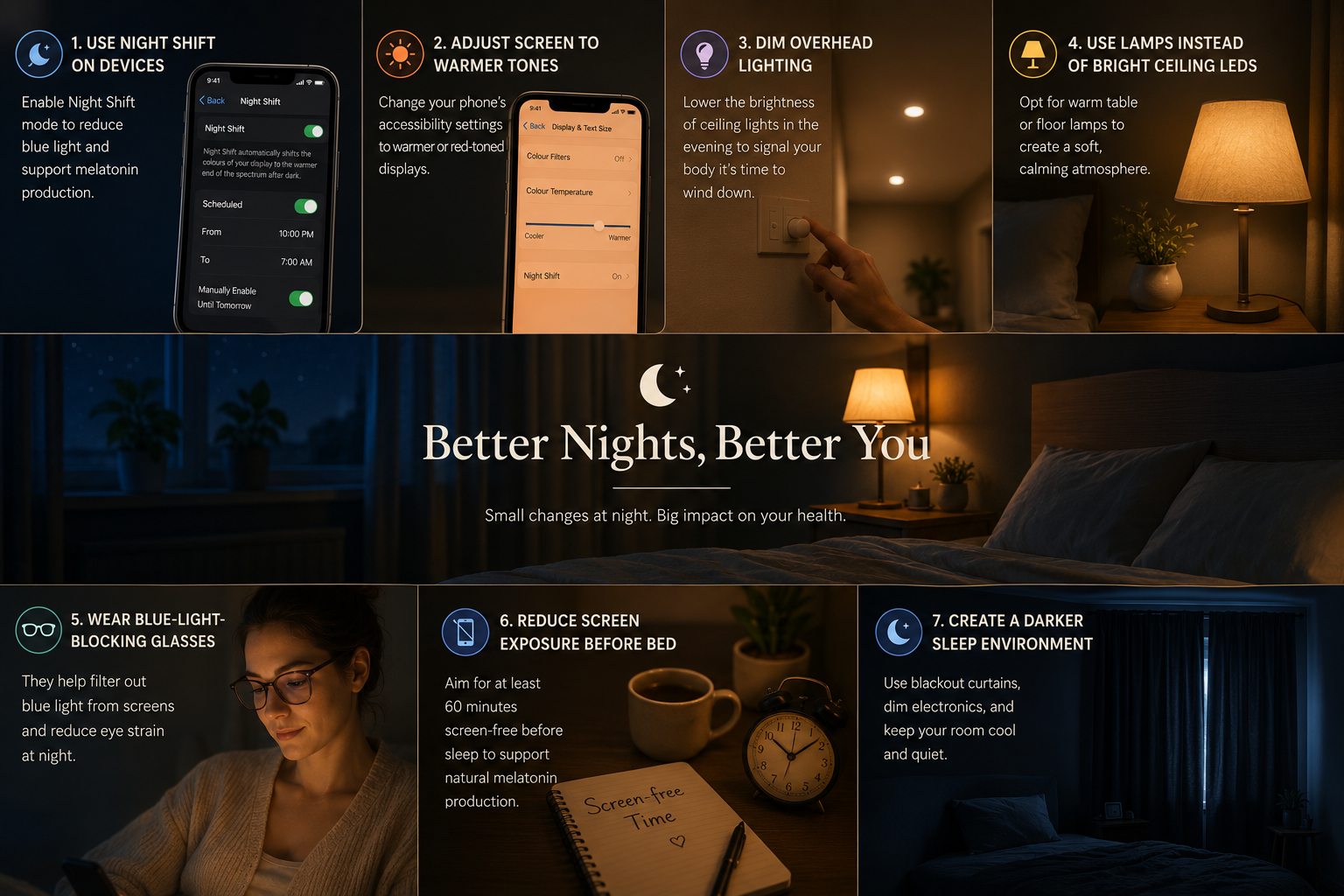
using Night Shift mode on devices
changing phone accessibility settings to warmer or red-toned displays
dimming overhead lighting
using lamps instead of bright ceiling LEDs
wearing blue-light-blocking glasses at night
reducing screen exposure before bed
and creating darker sleeping environments
Some people also find red light and near-infrared therapy helpful, particularly for nervous system regulation, sleep support, and recovery. Research in this area is still emerging, but it’s a fascinating space that aligns closely with mitochondrial health and circadian signalling.
And honestly? Sometimes candlelight, softer lighting, less stimulation, and simply slowing down at night can be profoundly therapeutic in themselves.
Nature Already Understood Rhythm
Nature has always operated in cycles.
Sunrise
Sunset
Seasons
Menstrual cycles
Sleep cycles
Tides
Growth and rest
The human body was never designed to function like a machine operating 24 hours a day under constant stimulation and artificial light.
Yet modern life often asks exactly that of us.
The more I practice, the more I realise that many people are not necessarily broken — they’re simply living completely out of rhythm with the biology they inherited.
And the body feels that.
Sev’s Final Thoughts
I think one of the most healing things we can do in modern life is remember that we are biological beings.
Your body craves rhythm
Consistency
Morning light
Darkness at night
Safety
Rest
Connection
Nature
Not endless stimulation and artificial environments.
Maybe that’s why people instinctively feel calmer after watching a sunset, swimming in the ocean, lighting candles at night, sitting around a fire, or waking naturally with the morning sun.
Because somewhere deep down, the body still remembers the environment it evolved in.
Sevim xx
