


If you've ever noticed that you feel like a completely different person in the days leading up to your period, you're certainly not alone.
Perhaps you're more sensitive than usual. Your patience feels shorter, your breasts are tender, your appetite has increased, or the things that ordinarily wouldn't bother you suddenly feel overwhelming.
For some women, these changes are subtle. For others, they can significantly affect their relationships, work, sleep and emotional wellbeing.
We're often told that this is simply part of being a woman.
That mood swings, bloating, cravings and discomfort are inevitable consequences of our monthly hormonal fluctuations.
But while hormonal changes are a natural part of the menstrual cycle, significant suffering shouldn't automatically be dismissed as normal.
As a naturopath, one of the things I find most fascinating about the menstrual cycle is how much information it can offer us about reproductive health, energy availability, stress physiology and overall wellbeing.
And perhaps no phase illustrates this quite like the luteal phase.
In Part III of The Cycle Series, we explored ovulation: the remarkable process through which a mature egg is released from the ovary.
But ovulation isn't the end of the story.
In many ways, it's the beginning of an entirely new hormonal chapter.
Welcome to the luteal phase.
What Is the Luteal Phase?
The luteal phase is the second half of the menstrual cycle, beginning immediately after ovulation and ending when menstruation begins.
In a typical ovulatory cycle, it lasts approximately 11–17 days, with an average of around 14 days.
Unlike the follicular phase, which can vary considerably in length, the luteal phase tends to be relatively consistent within an individual.
This is one reason understanding when you ovulate can be more informative than simply counting the days between periods.
And contrary to the popular belief that everyone ovulates on day 14, ovulation timing varies.
A woman with a 35-day cycle may ovulate considerably later than someone with a 25-day cycle, yet both may have a perfectly normal luteal phase.
What Happens After Ovulation?
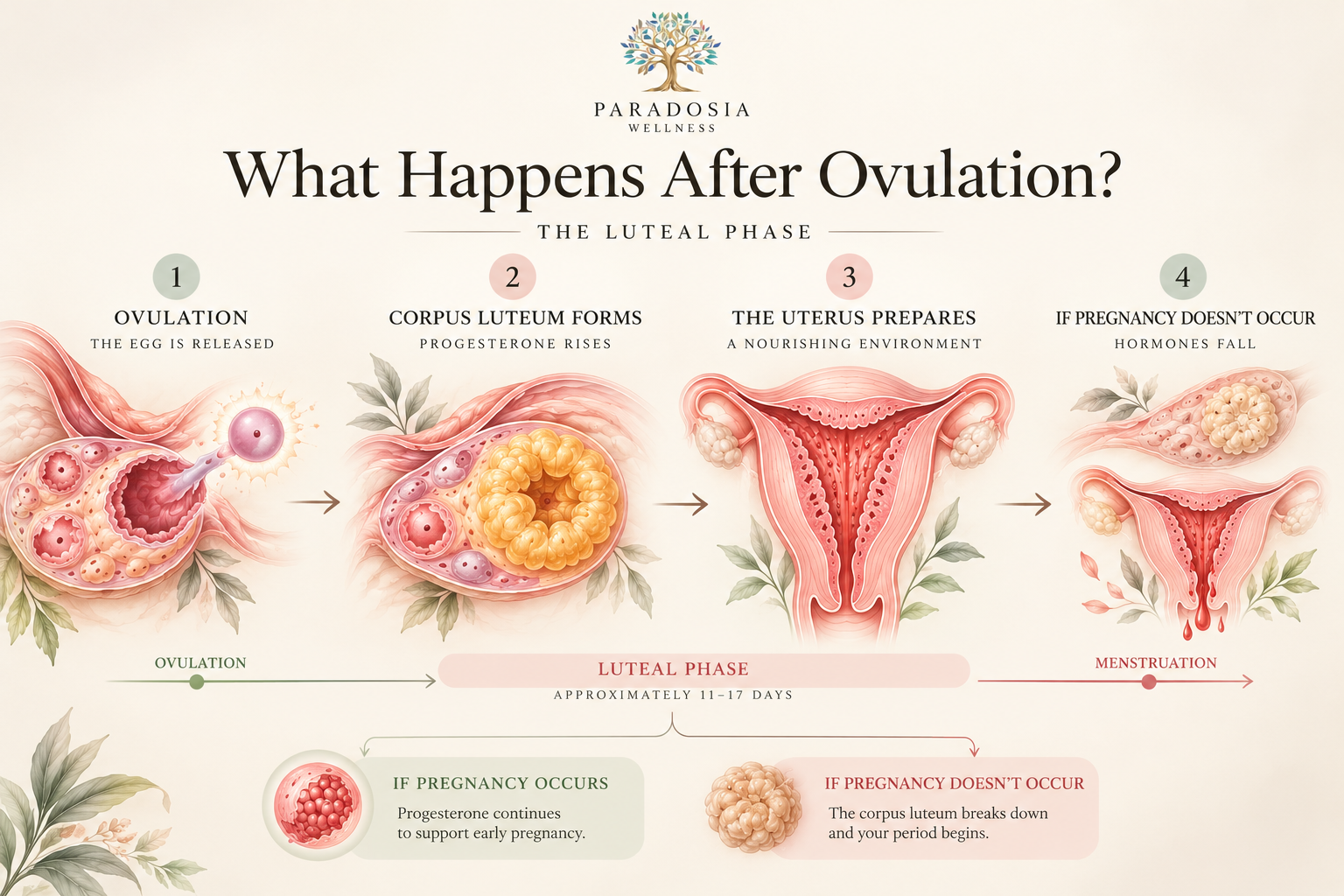
Once the ovarian follicle releases its egg, something remarkable happens.
The remaining follicular cells transform into a temporary endocrine structure called the corpus luteum, meaning yellow body.
This small, highly vascular structure becomes responsible for producing substantial amounts of progesterone, alongside oestradiol and other signalling substances.
Its primary purpose is to prepare the uterine lining for the possibility of pregnancy.
During the follicular phase, oestrogen stimulates the endometrium to grow.
After ovulation, progesterone helps transform that lining into a secretory environment capable of supporting implantation.
If pregnancy occurs, the developing embryo produces human chorionic gonadotropin (hCG), which signals the corpus luteum to continue producing progesterone until the placenta can take over.
If pregnancy does not occur, the corpus luteum gradually regresses.
Progesterone and oestrogen levels fall, the endometrial lining loses hormonal support, and menstruation begins.
This is the hormonal transition that brings one cycle to an end and allows another to begin.
But progesterone does considerably more than prepare the uterus for pregnancy.
Progesterone: More Than a Pregnancy Hormone
Progesterone is often described as the hormone of pregnancy.
And while its role in reproduction is essential, its physiological influence extends beyond the uterus.
Progesterone interacts with several systems throughout the body, including the brain, nervous system and thermoregulatory pathways.
One particularly interesting aspect is its relationship with a neuroactive metabolite called allopregnanolone.
Allopregnanolone is produced from progesterone and interacts with GABA-A receptors in the brain.
GABA, or gamma-aminobutyric acid, is one of the nervous system's primary inhibitory neurotransmitters.
In simple terms, GABA helps regulate neuronal excitability.
This is why progesterone and its metabolites are frequently discussed in relation to mood, sleep and emotional regulation.
However, the relationship is not as straightforward as saying that more progesterone automatically means feeling calmer.
In some women, changes in allopregnanolone signalling appear to contribute to increased emotional sensitivity, anxiety or irritability.
This is particularly relevant when discussing premenstrual disorders.
The issue is not always how much hormone the body produces, but how the brain responds to normal hormonal fluctuations.
That distinction challenges one of the most common misconceptions surrounding PMS.
The Subtle Changes You Might Notice
During the luteal phase, progesterone contributes to a small rise in basal body temperature, typically around 0.2–0.5°C.
Resting energy expenditure may also increase modestly, although the magnitude varies between individuals and studies.
Appetite and food preferences can change.
Some women experience more hunger or stronger cravings, particularly during the later luteal phase.
Fluid regulation, gastrointestinal motility and breast tissue sensitivity may also change.
These physiological responses help explain why the second half of the cycle can feel different from the first.
But different does not necessarily mean dysfunctional.
A healthy menstrual cycle is dynamic.
Hormones are supposed to fluctuate.
The goal isn't to maintain the same hormonal concentrations every day of the month.
It's to understand when those fluctuations are occurring normally and when symptoms suggest something deserves further attention.
Why Do Some Women Experience PMS While Others Don't?
Premenstrual syndrome, commonly known as PMS, refers to a recurring pattern of physical, emotional or behavioural symptoms that develop during the luteal phase and improve shortly after menstruation begins.
Symptoms may include breast tenderness, bloating, headaches, irritability, anxiety, fatigue, sleep disturbances and changes in appetite.
For a diagnosis of PMS, symptoms should follow a recognisable cyclical pattern and interfere meaningfully with everyday functioning.
But why do some women experience significant symptoms while others notice very little?
For many years, the explanation was often reduced to a simple hormonal imbalance.
Too much oestrogen.
Not enough progesterone.
An incorrect ratio between the two.
And although abnormal hormone production can occur, research suggests that many women experiencing PMS have hormone concentrations within normal physiological ranges.
The difference may lie partly in individual sensitivity to hormonal changes, particularly the effects of progesterone metabolites on the nervous system.
Neurotransmitter systems, including serotonin and GABA signalling, are also involved.
This means PMS cannot always be explained by a straightforward deficiency or excess of a particular hormone.
Nor does it mean the symptoms are imaginary.
A person can experience a very real physiological response to normal hormonal fluctuations.
And understanding that opens the door to more individualised treatment.
PMS and PMDD: Understanding the Difference
While PMS is common, some women experience a much more severe premenstrual condition known as premenstrual dysphoric disorder (PMDD).
PMDD is characterised by significant mood-related symptoms that occur cyclically, typically during the luteal phase, and improve shortly after menstruation begins.
Symptoms can include severe irritability, anxiety, depressed mood, emotional volatility and a sense of being overwhelmed.
For some women, these symptoms are profoundly disruptive.
They may affect relationships, employment, social functioning and overall quality of life.
Importantly, PMDD is not simply an extreme version of ordinary menstrual discomfort.
It is a recognised premenstrual disorder associated with altered sensitivity to normal reproductive hormone fluctuations.
What about 'Oestrogen Dominance'?
If you've spent time researching hormonal health online, you've probably encountered the phrase oestrogen dominance.
It's frequently used to explain almost everything from PMS and breast tenderness to weight gain, heavy periods and mood changes.
The idea generally suggests that oestrogen is excessively high relative to progesterone.
But there is an important problem with how this term is commonly used.
Oestrogen dominance is not a standardised medical diagnosis.
There is no universally accepted laboratory threshold, diagnostic definition or validated oestrogen-to-progesterone ratio that reliably explains the broad range of symptoms attributed to it.
This doesn't mean that abnormal oestrogen production, altered metabolism or insufficient progesterone cannot occur.
They certainly can.
But it does mean we should be cautious about attributing every premenstrual symptom to an assumed hormonal imbalance.
For example, breast tenderness may occur in women with otherwise normal hormonal patterns.
Mood changes may reflect altered neurological sensitivity rather than an abnormal progesterone concentration.
Heavy menstrual bleeding may have structural, endocrine or other causes that deserve investigation.
And a woman who doesn't ovulate regularly may experience abnormal bleeding because she isn't producing the expected cyclical progesterone.
These are different clinical situations.
They shouldn't automatically be grouped under one loosely defined label.
As practitioners, I believe we have a responsibility to look beyond popular terminology and investigate what is actually happening.
What About Low Progesterone and a Short Luteal Phase?
Progesterone has become something of a celebrity in the world of hormonal wellness.
And understandably so.
It's essential for normal reproductive physiology.
But the growing popularity of progesterone creams, hormone-balancing supplements and online hormone panels has also created confusion about what low progesterone actually means.
Is a Short Luteal Phase a Problem?
A luteal phase lasting 10 days or less may warrant further assessment, particularly in the context of difficulty conceiving or recurrent reproductive concerns.
The term luteal phase deficiency is sometimes used to describe suspected abnormalities in progesterone production, duration or endometrial response.
However, the diagnosis remains controversial.
The American Society for Reproductive Medicine notes that no available diagnostic test has been shown to reliably distinguish fertile from infertile women on the basis of luteal function.
Furthermore, isolated luteal phase deficiency has not been established as an independent cause of infertility or recurrent pregnancy loss.
That doesn't mean short luteal phases should always be ignored.
It means we need to investigate them thoughtfully.
Potential contributors to disrupted ovulatory function may include thyroid dysfunction, elevated prolactin, insufficient energy availability, significant physiological stress or other endocrine conditions.
The appropriate approach is to assess the broader clinical picture rather than assume progesterone supplementation is automatically necessary.
The Luteal Phase and Your Metabolism
Another fascinating aspect of the luteal phase is the relationship between reproductive hormones and energy metabolism.
Some studies suggest that resting metabolic rate increases modestly after ovulation.
This may contribute to changes in appetite and energy requirements.
It's also common for women to report stronger cravings for carbohydrates or sweet foods before menstruation.
Unfortunately, these experiences are often framed as a lack of willpower.
But appetite is regulated by a complex interaction between hormones, neural signalling, energy availability and environmental factors.
It isn't simply a matter of discipline.
From a naturopathic perspective, I think this is an important opportunity to shift the conversation away from restriction and towards nourishment.
Rather than fighting increased hunger, consider whether you're eating enough throughout the day.
Are your meals providing adequate protein?
Are you including fibre-rich carbohydrates?
Are you consuming sufficient dietary fats?
Are you relying on caffeine to compensate for inadequate sleep or food intake?
And are you allowing yourself to eat in response to genuine hunger?
A menstrual cycle should not become another reason to impose rigid dietary rules.
Supporting your physiology is far more useful than trying to control every fluctuation it produces.
Supporting the Luteal Phase Through Nutrition
Nutrition is one of the foundations of naturopathic care, but I want to make an important distinction.
There is no single food that reliably increases progesterone or cures PMS.
And the idea that we must eat entirely different foods during each menstrual phase is not supported by strong clinical evidence.
However, dietary quality and nutritional adequacy can influence overall health, and certain nutrients have been investigated specifically for premenstrual symptoms.
Magnesium
Magnesium is involved in hundreds of enzymatic processes, including neuromuscular function and normal nervous system activity.
It is frequently recommended for PMS, particularly for symptoms such as headaches, muscle discomfort and mood changes.
Some small studies suggest potential benefits, but the overall evidence remains limited and inconsistent.
I prefer to begin by assessing dietary intake rather than automatically prescribing high-dose supplementation.
Useful sources include pumpkin seeds, almonds, legumes, whole grains and leafy greens.
Supplementation may be appropriate in selected circumstances, but dose, kidney function and medication interactions should be considered.
Vitamin B6
Vitamin B6 contributes to amino acid metabolism and neurotransmitter synthesis.
It has been investigated for premenstrual mood symptoms, with some studies suggesting possible benefits.
However, evidence quality is variable, and long-term excessive supplementation can cause peripheral neuropathy.
This is particularly important because B6 is frequently included in multivitamins, magnesium combinations and products marketed for hormonal balance.
Taking several products together can unintentionally increase total intake.
More is not always better.
Calcium
Calcium is one of the better-studied nutrients in relation to PMS.
Some clinical trials have reported improvements in premenstrual symptoms with calcium supplementation, although results and study quality vary.
Food sources include yoghurt, dairy products, calcium-set tofu, fortified alternatives and certain leafy vegetables.
Where supplementation is considered, total dietary intake, individual health needs and potential risks should guide the decision.
Omega-3 Fatty Acids
Omega-3 fatty acids are involved in cell membrane function and inflammatory signalling.
Some studies have investigated their effects on menstrual discomfort and premenstrual symptoms.
While findings are promising in certain areas, evidence is not sufficiently consistent to describe omega-3 supplementation as an established treatment for PMS.
Including oily fish, walnuts, chia seeds and flaxseeds can nevertheless contribute to a nutritionally balanced diet.
Supporting Blood Glucose Regulation
Although blood glucose fluctuations are not established as the primary cause of PMS, irregular eating patterns may contribute to fatigue, irritability and hunger in some individuals.
Practical strategies include regular meals, adequate protein, fibre-rich carbohydrates and avoiding prolonged periods of under-eating.
The aim is not to eliminate carbohydrates.
It's to provide the body with consistent, adequate nourishment.
Herbal Medicine and the Luteal Phase
Herbal medicine has a long history of use in women's reproductive health.
And as a naturopath, I believe this traditional knowledge deserves thoughtful consideration alongside modern clinical research.
However, herbs are pharmacologically active substances.
Their effects depend on the preparation, dose, individual physiology and potential interactions with medicines.
A herb traditionally associated with hormonal balance is not automatically suitable for every woman experiencing PMS.
Vitex agnus-castus: The Most Discussed PMS Herb
Also known as chaste tree or chasteberry, Vitex agnus-castus has a long history of use for menstrual complaints.
It is perhaps the botanical most commonly associated with luteal phase support.
Clinical trials and systematic reviews suggest that certain standardised Vitex preparations may improve some PMS symptoms.
However, study quality varies, and findings cannot necessarily be generalised to every commercial preparation.
Vitex appears to influence dopaminergic signalling and may affect prolactin regulation.
But it is misleading to describe Vitex simply as a natural progesterone supplement.
It does not contain progesterone, and evidence that it reliably raises progesterone in all women is lacking.
This distinction matters when choosing a treatment.
Vitex may also interact with dopaminergic medicines and hormonal therapies. Its safety during pregnancy and breastfeeding has not been adequately established.
It should be selected based on individual circumstances, not automatically recommended to everyone with premenstrual symptoms.
Chamomile and Lemon Balm
Matricaria chamomilla (Chamomile) and Melissa officinalis (Lemon Balm) are traditionally used to support relaxation and digestive comfort.
They may be useful as part of a broader approach to sleep, stress management and general wellbeing.
However, clinical evidence for treating PMS specifically remains limited.
They should not be presented as treatments for progesterone deficiency or PMDD.
A Note on 'Hormone-Balancing' Formulas
One of my concerns with the supplement industry is how easily complex endocrine conditions can be reduced to a marketing phrase.
Balances hormones.
Boosts progesterone.
Detoxes excess oestrogen.
These claims often sound reassuring, but they can conceal considerable uncertainty.
Before using a herbal formula, I believe we should ask:
What symptom or physiological process are we trying to address?
Is there evidence that this particular preparation helps?
Is the person ovulating?
Could an underlying medical condition be contributing?
And are there contraindications, interactions or pregnancy considerations?
Herbal medicine is most valuable when it is individualised, appropriately selected and grounded in both clinical reasoning and safety.
Stress, Sleep and the Brain–Ovary Connection
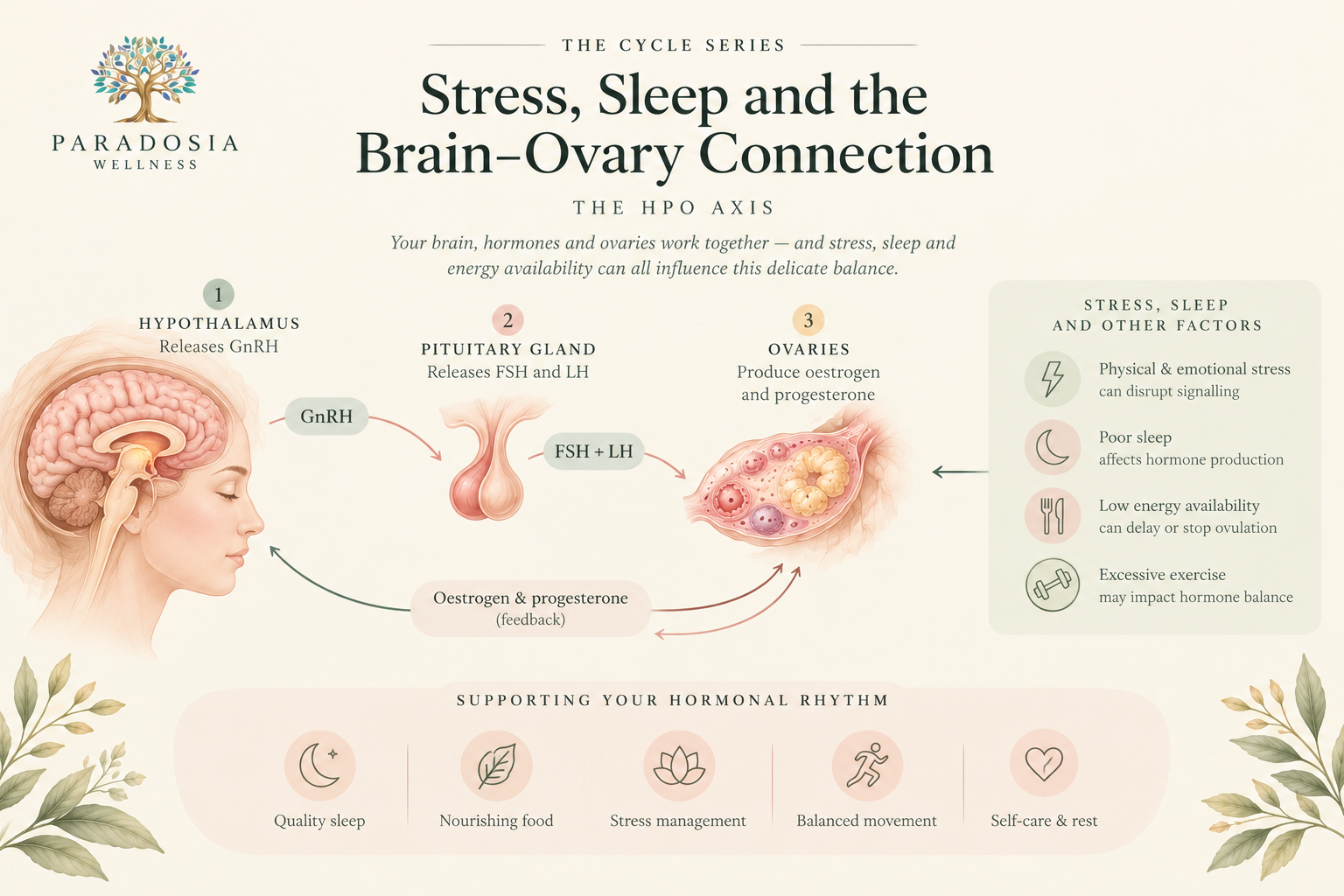
The menstrual cycle is regulated through communication between the hypothalamus, pituitary gland and ovaries.
This is known as the hypothalamic–pituitary–ovarian axis, or HPO axis.
The hypothalamus releases gonadotropin-releasing hormone (GnRH), which stimulates the pituitary to release follicle-stimulating hormone (FSH) and luteinising hormone (LH).
These signals influence follicular development, ovulation and ovarian hormone production.
Significant physiological stress, insufficient energy availability and excessive exercise can disrupt this communication.
In some cases, ovulation may become irregular or stop altogether.
But we need to be careful not to oversimplify this relationship.
Every stressful day does not cause low progesterone.
And every woman experiencing PMS does not have a dysfunctional stress response.
Nevertheless, adequate sleep, sufficient nutrition and sustainable activity are important foundations of reproductive health.
From a practical perspective, this might involve establishing a consistent sleep schedule, reducing excessive caffeine intake, adjusting exercise intensity when recovery is inadequate, or incorporating relaxation practices that feel genuinely supportive.
I also think it's worth challenging the popular idea that women must dramatically change their lifestyle according to each menstrual phase.
Some women find cycle awareness helpful for planning activities and understanding changes in energy or mood.
But research does not support rigid rules suggesting that every woman should avoid intense exercise, important decisions or demanding work during the luteal phase.
Your cycle can inform your choices without dictating your capabilities.
When Premenstrual Symptoms Deserve Further Investigation
Some degree of cyclical change can be expected.
But there are situations where further assessment is particularly important.
These include:
Premenstrual symptoms that significantly interfere with work, relationships or daily functioning
Severe depression, anxiety, rage or emotional distress before menstruation
Persistent spotting or bleeding between periods
Repeatedly very short luteal phases, particularly when trying to conceive
Irregular or absent periods
Heavy bleeding, severe pelvic pain or symptoms that are progressively worsening
Symptoms that occur throughout the month rather than primarily before menstruation
Depending on the presentation, appropriate investigations may include assessment of thyroid function, prolactin, ovulatory patterns, iron status or other relevant medical concerns.
Not every woman requires an extensive hormone panel.
And not every symptom requires supplementation.
Sometimes the most valuable first step is a careful history.
Understanding when symptoms begin, how long they last, whether they resolve after menstruation and how they affect daily life can reveal far more than an isolated laboratory result.
For significant premenstrual mood symptoms, daily tracking over at least two cycles is especially valuable.
And if premenstrual symptoms include thoughts of self-harm or suicide, urgent professional support is essential.
Learning to Work With Your Cycle, Not Against It
One of the most empowering things about understanding the menstrual cycle is recognising that your body is not supposed to feel exactly the same every day.
There are natural changes in reproductive hormones, body temperature, appetite and other physiological processes.
These fluctuations are not inherently signs of imbalance.
But neither should we use the word normal to dismiss symptoms that are affecting someone's quality of life.
I believe the most useful approach lies somewhere between those extremes.
We can acknowledge that hormonal changes are physiological while recognising that some women experience a disproportionate response to them.
We can explore nutrition, lifestyle and herbal medicine without claiming that every symptom can be resolved naturally.
And we can investigate potential endocrine dysfunction without assuming that every difficult luteal phase is caused by low progesterone.
For me, this is what individualised healthcare should look like.
Not simply assigning a label.
Not automatically prescribing a supplement.
But understanding the person's cycle, their symptoms, their circumstances and the evidence supporting different treatment options.
Final Thoughts
The luteal phase is often portrayed as the difficult half of the menstrual cycle.
The time when energy drops, cravings increase and emotions become harder to manage.
But I think that description overlooks something important.
This phase represents an extraordinary sequence of endocrine events, coordinated through communication between the brain, ovaries and uterus.
Progesterone rises, the endometrium prepares for the possibility of pregnancy, and the body moves through another stage of its reproductive rhythm.
For some women, that transition is barely noticeable.
For others, it brings symptoms that deserve genuine attention and care.
The goal isn't to eliminate every hormonal fluctuation or achieve a perfectly symptom-free cycle at all costs.
It's to understand what is happening, recognise when something may need support, and make informed decisions about your health.
Because your menstrual cycle isn't something to fight against.
It's a source of information about your body, and one that deserves to be understood rather than dismissed.
Sevim xx
